Every year, International Overdose Awareness Day creates a space for communities around the world to come together in remembrance, reflection, and action. It is a time to honor lives lost to overdose, recognize the impact of loss on families and communities, and renew commitments to prevent future deaths through compassion, evidence-based approaches, and collective action.
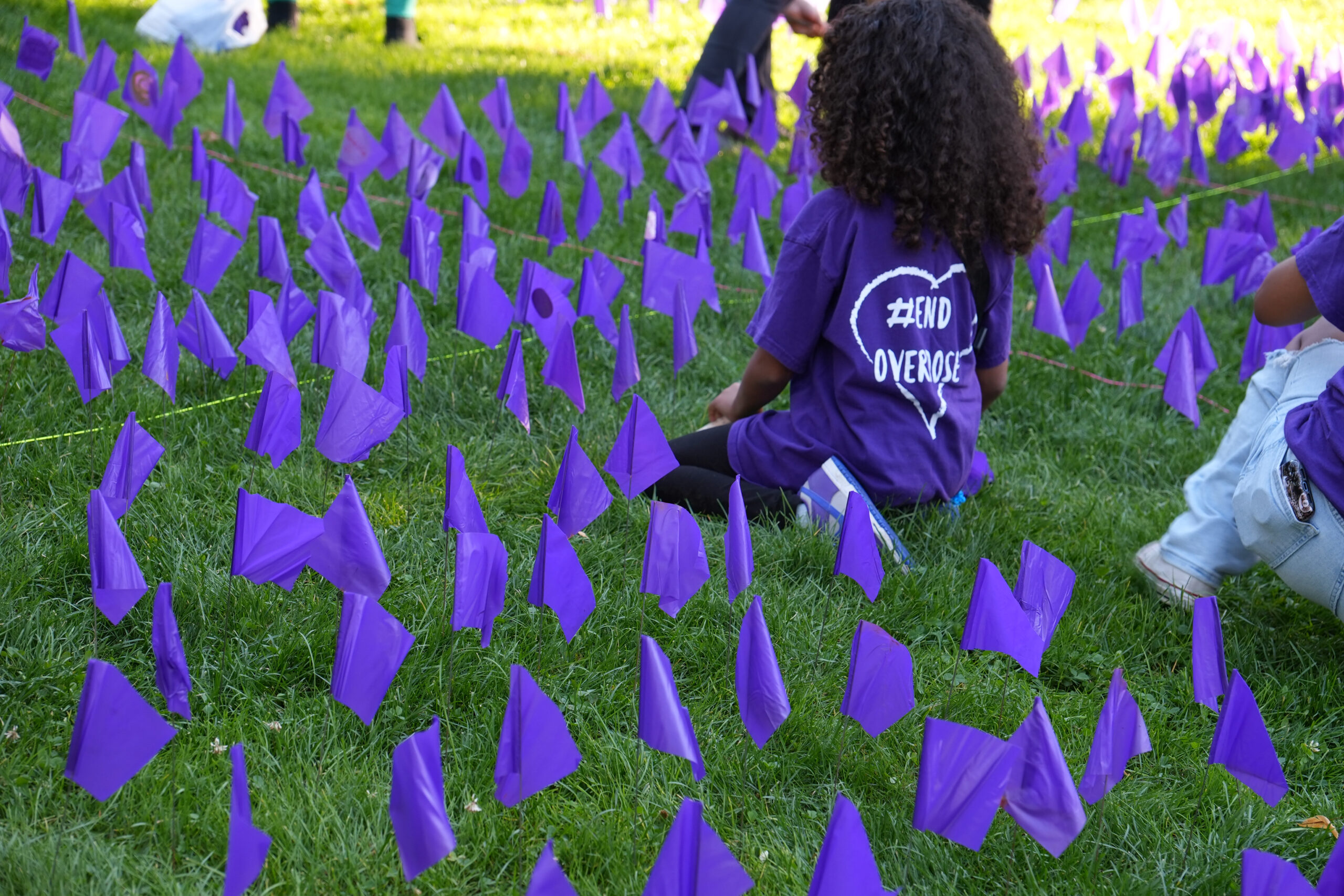
This year’s observance in Boston offered space for those commitments to be experienced and shared across the community. From August 31 through September 3, more than 22,000 purple flags were placed in Boston Common, representing lives lost to overdose across Massachusetts between 2013 and 2025. As a planning partner for the memorial alongside the Massachusetts Department of Public Health Bureau of Substance Addiction Services, Boston Medical Center, and the Boston Public Health Commission, HRiA joined thousands of visitors in honoring those lost, sharing resources, and fostering connections to care and support.
The gathering also took place at a notable moment for the Commonwealth. Massachusetts has reported three consecutive years of declines in opioid-related overdose deaths, including the first year in more than a decade with fewer than 1,000 recorded deaths. Those encouraging trends offered reason for hope, while the thousands of flags across the Common underscored the profound human impact behind the data and the importance of sustaining investments in harm reduction, treatment, recovery support, and overdose prevention.
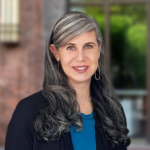
Throughout the event, HRiA staff connected with attendees at resource tables, shared information about the Massachusetts Substance Use Helpline, BeHERE trainings, Help After Loss to Overdose (HALO), and the You Can initiative, and listened as visitors reflected on experiences of loss, healing, and recovery. To explore the significance of this year’s observance, we spoke with HRiA’s Angela Kelly, who participated in the event, and asked her to share her perspective on progress, partnership, and the work that lies ahead.
Reflections from the Field
Q: This year’s observance came at a time when Massachusetts is seeing its third consecutive year of declines in overdose deaths, including the first-time that annual deaths have fallen below 1,000 in more than a decade. How did that context shape the tone or significance of this year’s event for you?
A: While the declining overdose death rates inspire hope for what’s possible and highlight the importance of sustained investment in harm reduction, treatment access, and other life-saving strategies, the sea of purple flags that filled Boston Common reminds us that each death from overdose is one too many and that every life cut short is someone’s loved one.
Despite the strides made in our state, we hear every day on our Helplines from people seeking support as they navigate systemic barriers that too often prove fatal. We also know that this progress has not been experienced equally. Racial inequities persist, and many communities continue to face escalating challenges of accessing care.
As we hold the stories of those remembered on International Overdose Awareness Day alongside the recovery journeys shared throughout the event, it remains imperative that we do everything possible to reduce harm, save lives, stop stigma, and center equity across these efforts.
Q: This year’s event brought together a broad coalition of leaders, including Governor Maura Healey, state and local officials, healthcare providers, community organizations, advocates, and people with lived experience. What did their presence and participation signal to you about Massachusetts’ commitment to addressing overdose and supporting recovery?
A: The broad coalition that came together to make Overdose Awareness Day such a powerful gathering reminds us that we all have a role to play in working toward a future free of stigma, where the safety and dignity of people who use substances are affirmed and everyone can access the care and support they seek across multiple pathways of recovery.
Having the Governor and other elected leaders join us is a testament to the sustained advocacy led by so many people in recovery and those who have experienced loss due to substance use.This issue touches every community, and we see that reflected as people from all walks of life pause on Boston Common to bear witness, remember loved ones, and access resources.
Grounded by the gravity of all that we grieve and encouraged by the progress being made, we must continue to work together to advance policies and strengthen care, not only on Overdose Awareness Day, but every day of the year.
Q: As you spoke with attendees and observed the day’s activities, were there any particular moments, conversations, or themes that felt especially meaningful or hopeful?
Every year, many people stop by our table to express their gratitude for this event and ask what they can do to support these efforts. Some have just stumbled upon the memorial and are learning about Overdose Awareness Day for the first time. Others know deeply why we’re there, having survived an overdose themselves or experienced the loss of a loved one.
Many visitors share inspiring reflections on their journeys in long-term recovery and the ways they now provide hope and support to others. Several of us staffing the event bring our own personal experiences, sharing empathy, solidarity, and practical resources.
Each person who stops to chat with us, who shares a memory or lovingly adds a name to a purple flag, who asks about naloxone, rescue breathing, or what happens when they call our Helplines, reminds us why this work must remain visible, welcoming, and accessible.
For those of us who have lost loved ones to overdose, the heartache never fully disappears. Events like this offer an opportunity to channel our grief into connection, compassion, hope, and healing.
Looking Beyond Boston
The conversations sparked during International Overdose Awareness Day in Massachusetts extended well beyond Boston Common. While the memorial honored lives lost, it also highlighted the collective commitment of individuals, families, advocates, healthcare providers, community organizations, and public health leaders working every day to prevent overdose and support recovery.
The recent decline in overdose deaths demonstrates what is possible when communities invest in evidence-based prevention, harm reduction, treatment, recovery supports, and equitable access to care. At the same time, the reflections shared throughout the event remind us that progress must reach every community and that barriers to care, stigma, and inequities continue to affect too many people.
The vision that brought thousands of people together on Boston Common extends beyond a single day of remembrance. It also extended far beyond Boston, with HRiA staff participating in Overdose Awareness Day vigils and resource fairs in communities across the country, from Western MA to Illinois to Washington state. Across the communities where we work, we are united in envisioning a future where fatal overdoses are prevented, where people can access support without fear of judgment, and where every person has the opportunity to pursue health and healing in the ways that work best for them. Reaching that future will require sustained investment, continued partnership, and a commitment to meeting people where they are with compassion, dignity, and care.
QUICK LINKS